Lean UX • Proto.io • Sketch • Adobe Creative Suite • Design Lead • SAFe Agile
Goal
Kaiser Permanente's Home Care required digital transformation to significantly boost provider efficiency and equip patients with essential tools for self-improvement.
Objective
Develop a proof-of-concept product suite for providers, patients, and caregivers to centralize and streamline on-site care, documentation, and scheduling.
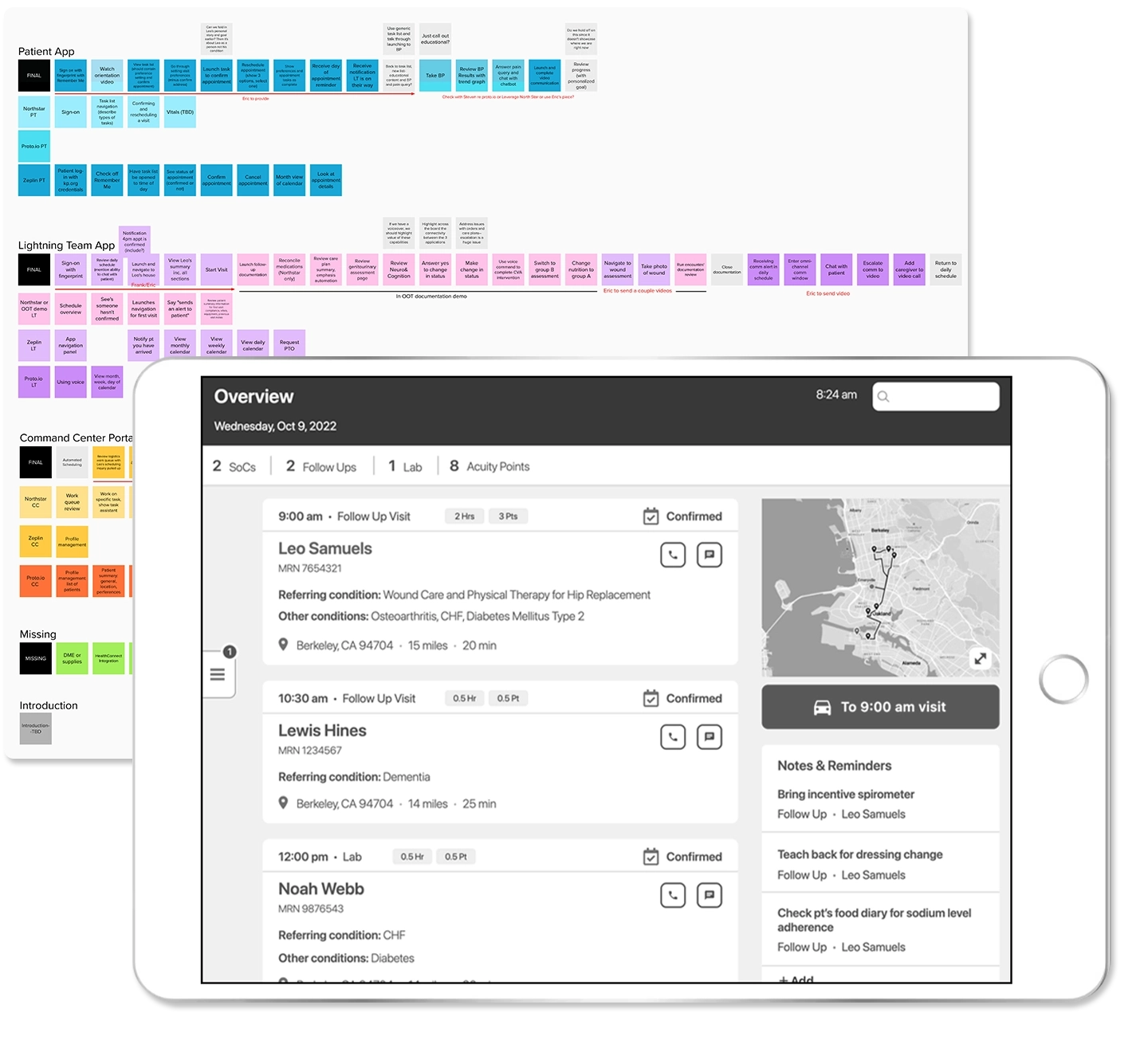
Collaborated with the product team to gather and synthesize pain points, needs, and opportunities from the perspective of the business and the users.
Aligned the project vision with business objectives, success metrics (KPIs), and technical constraints.
The prototype was iterated in near real time after each group session, using direct user feedback to explore alternative solutions.
Insights from testing informed design pivots that improved usability and ensured the design better supported providers in real-world scenarios and helped defined the Minimum Viable Product.

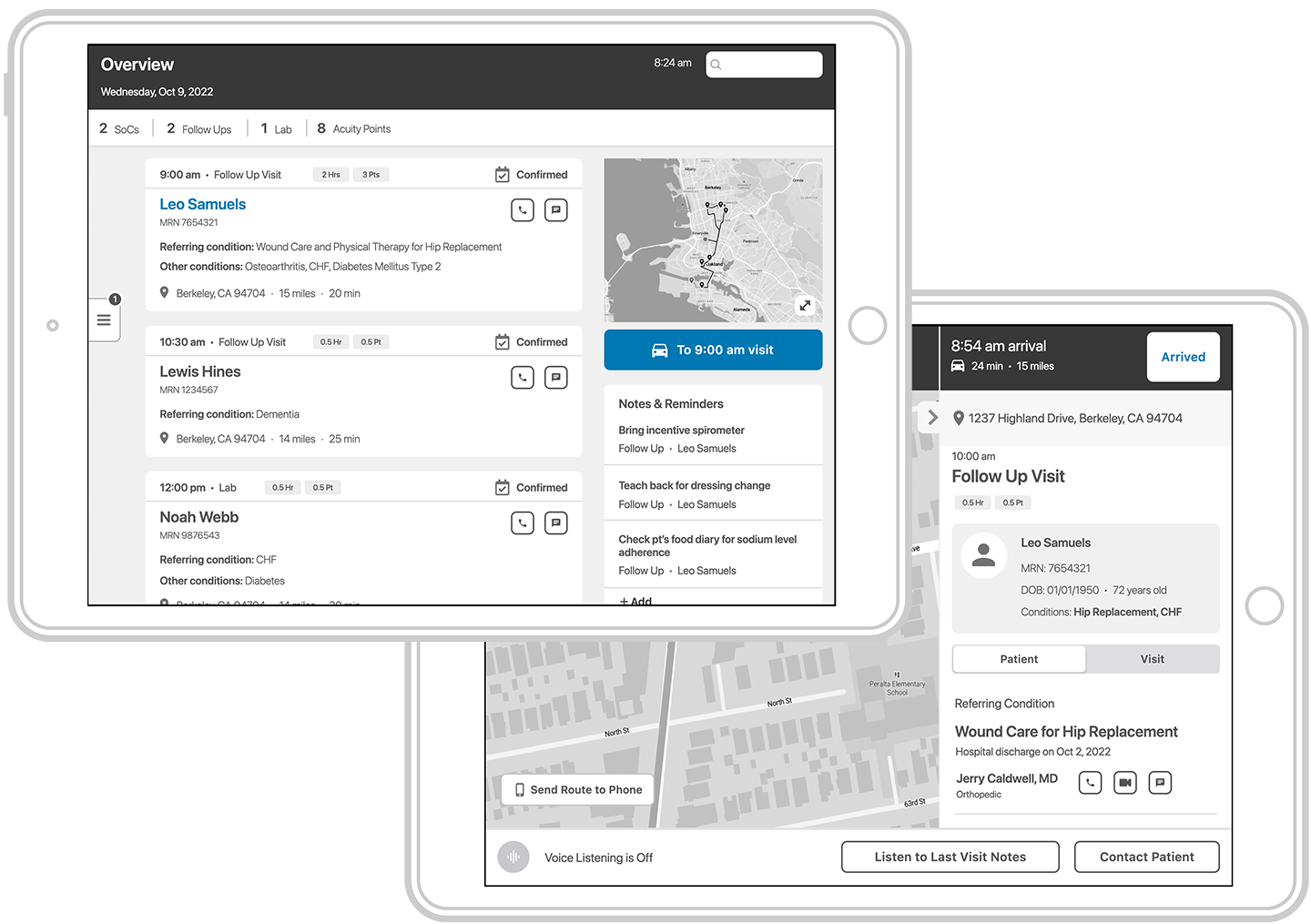
The dashboard consolidates real-time Command Center updates, patient information, and communication tools, enabling providers to efficiently manage appointments from the app.
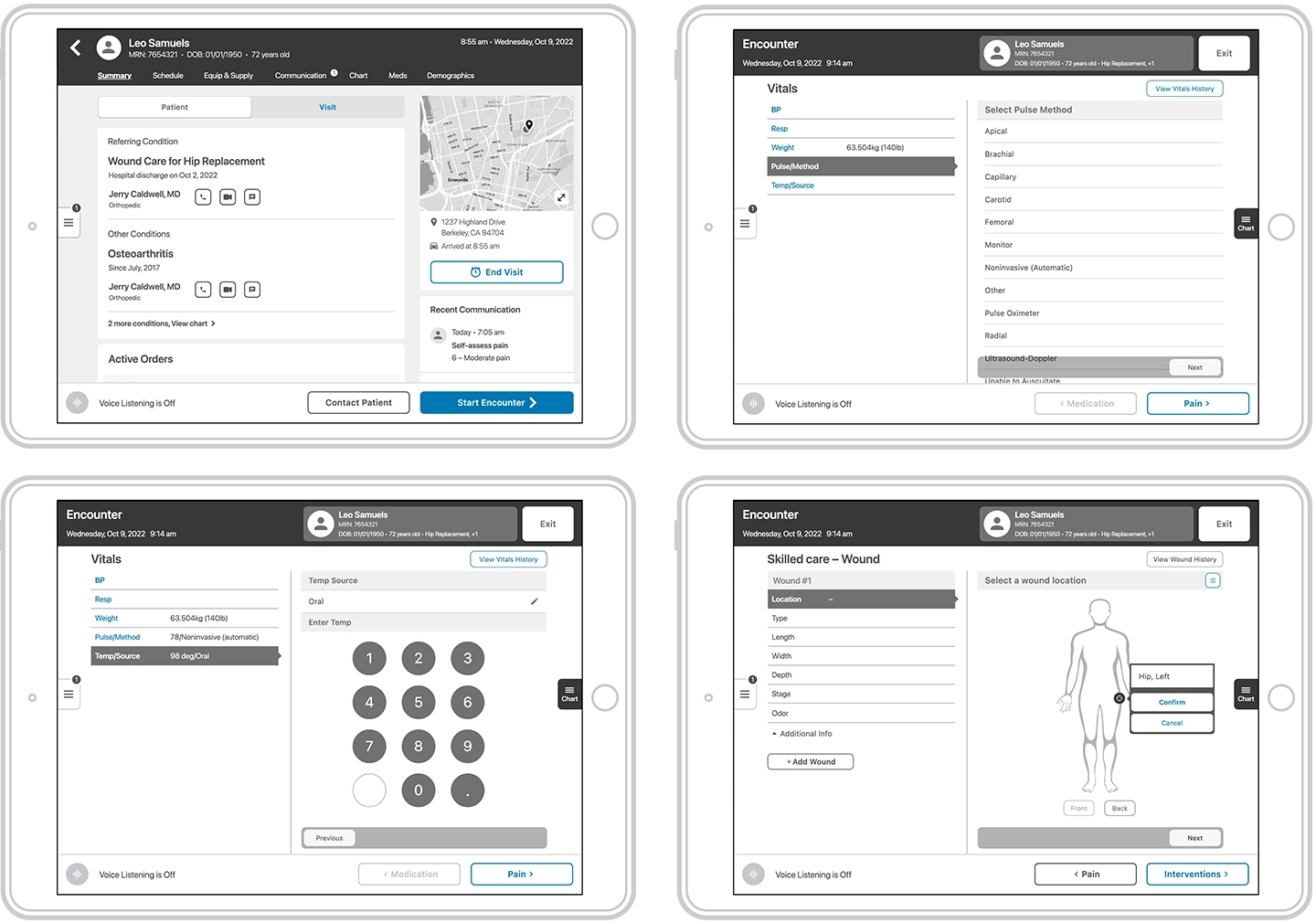
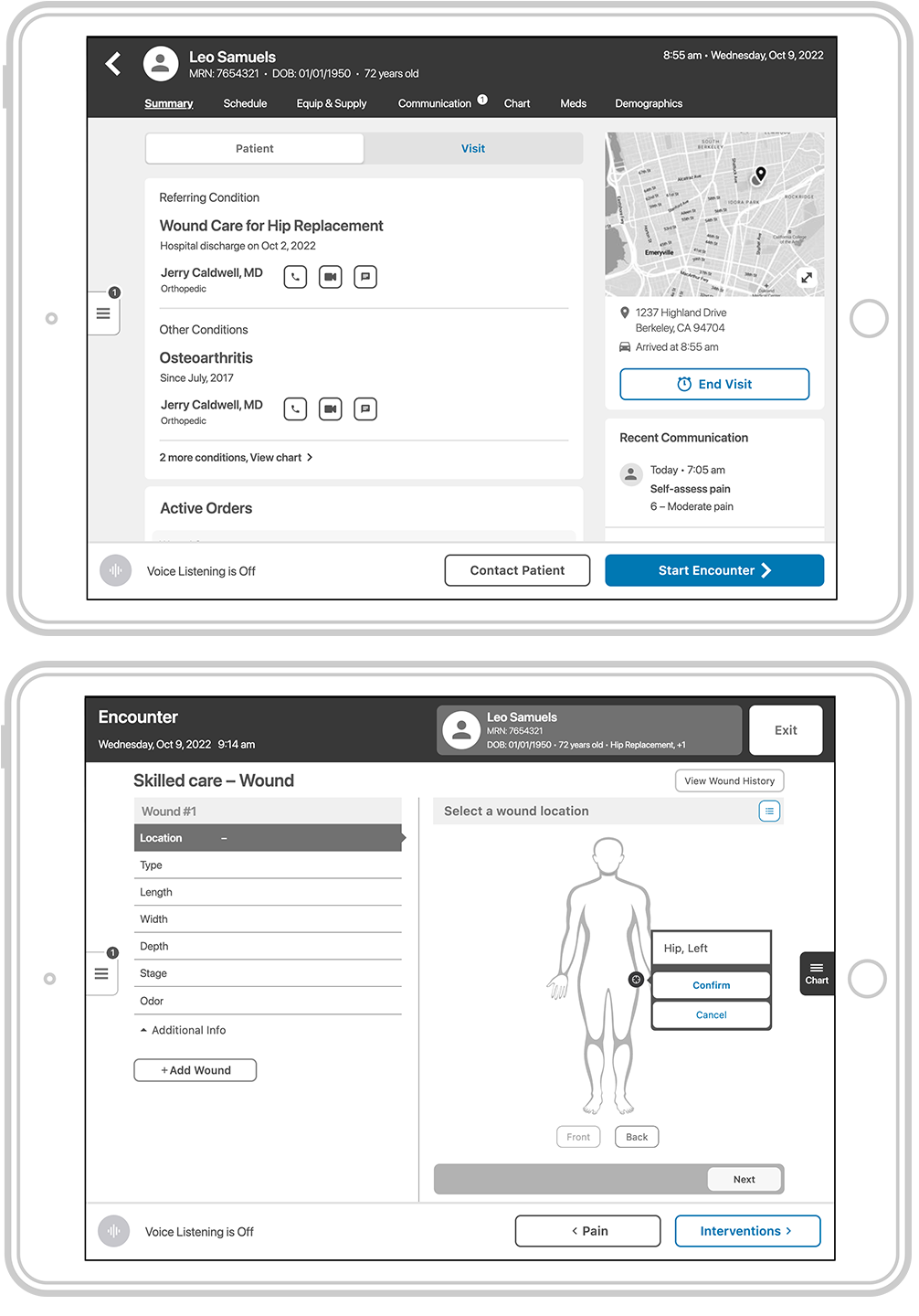
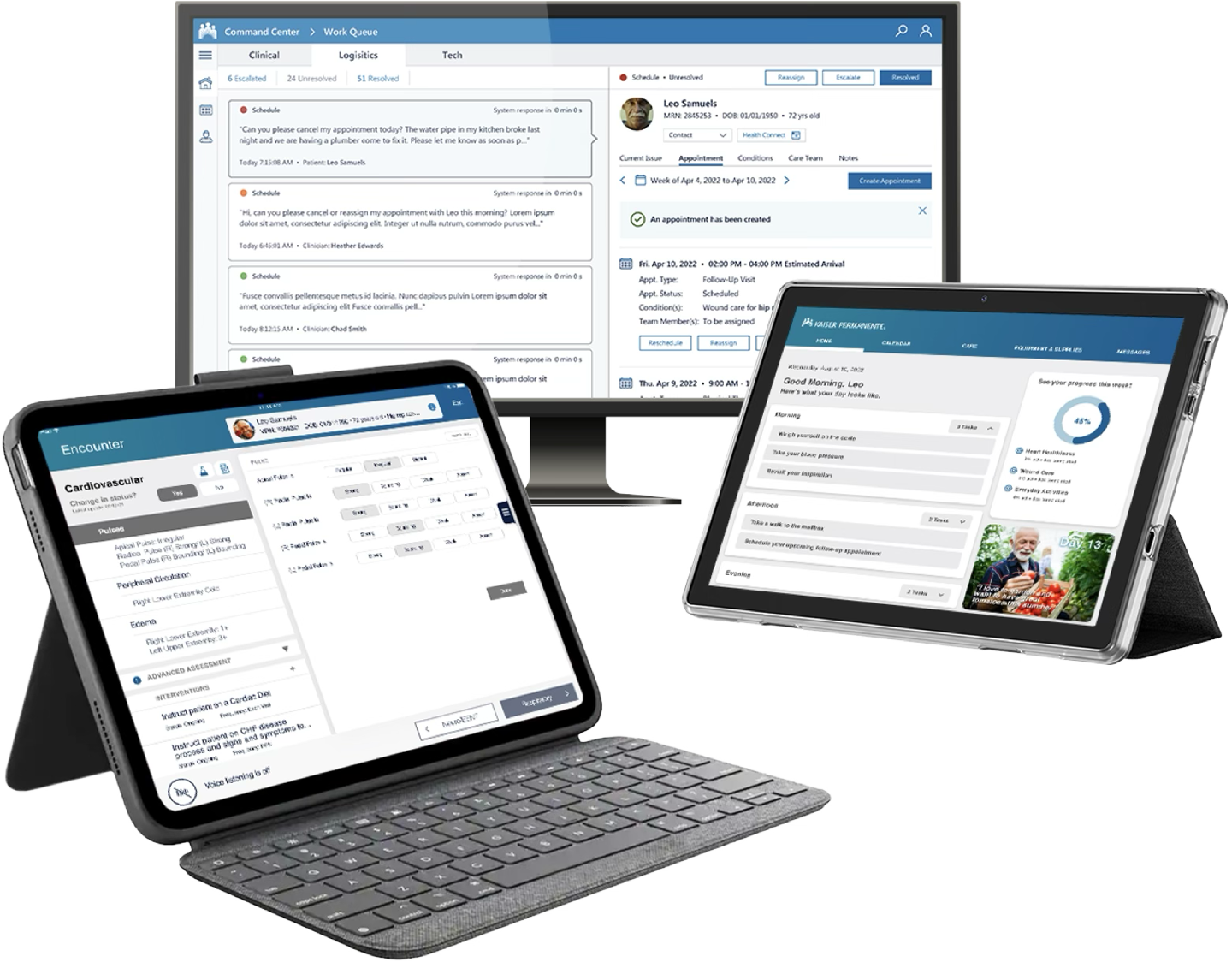
Though the iPad included a keyboard attachment, the app was intentionally designed to minimize typing, Quick, tap-based actions allowing providers to complete data entry faster and dedicate more time to patient care.
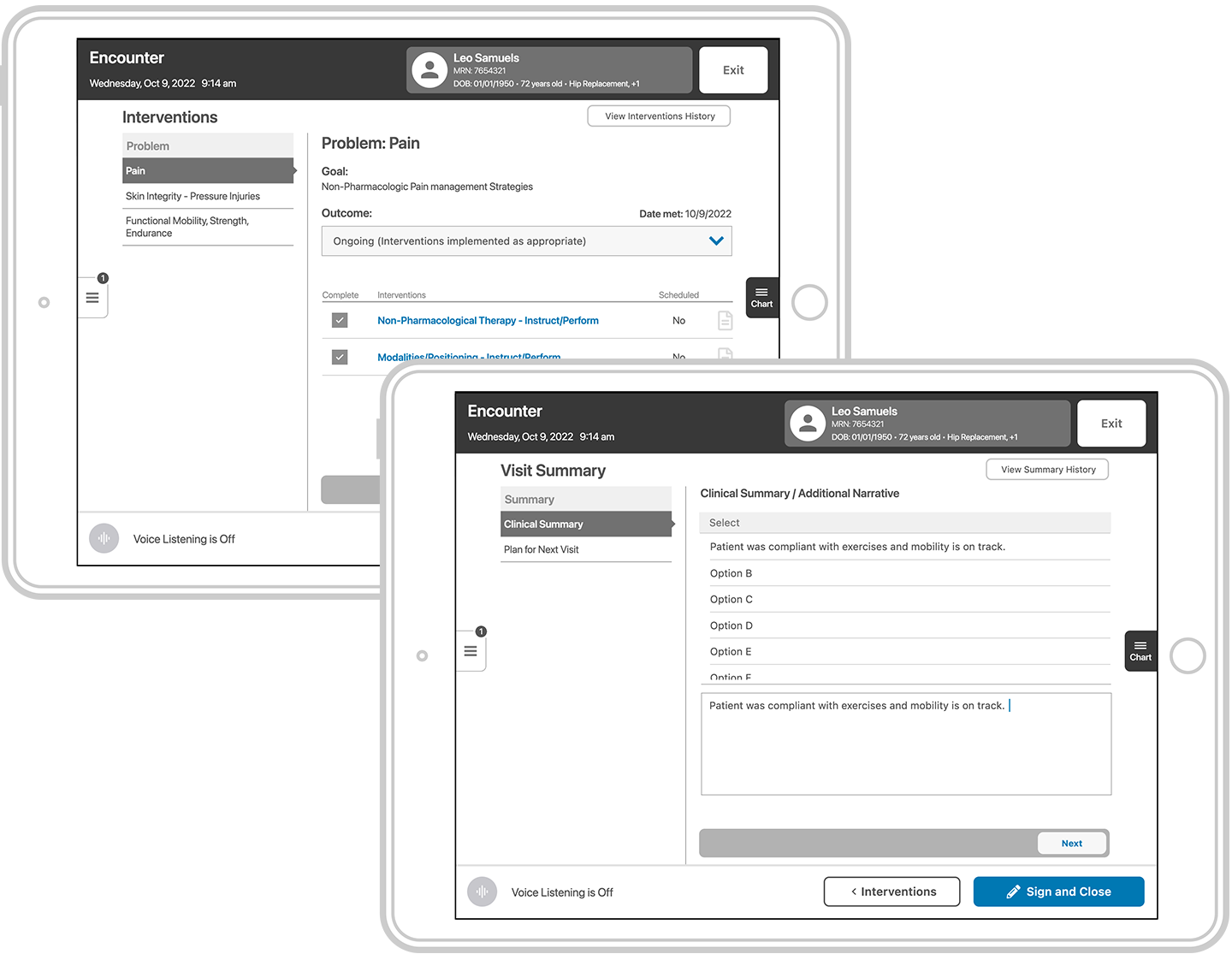
The design provided selection of clinical outcomes, with the goal to improve documentation accuracy. Care providers can access intervention and summary history, supporting better-informed clinical decisions.
The app was designed to sync with the Epic Health System in real time, while storing data locally to ensure continuity during network connection issues.
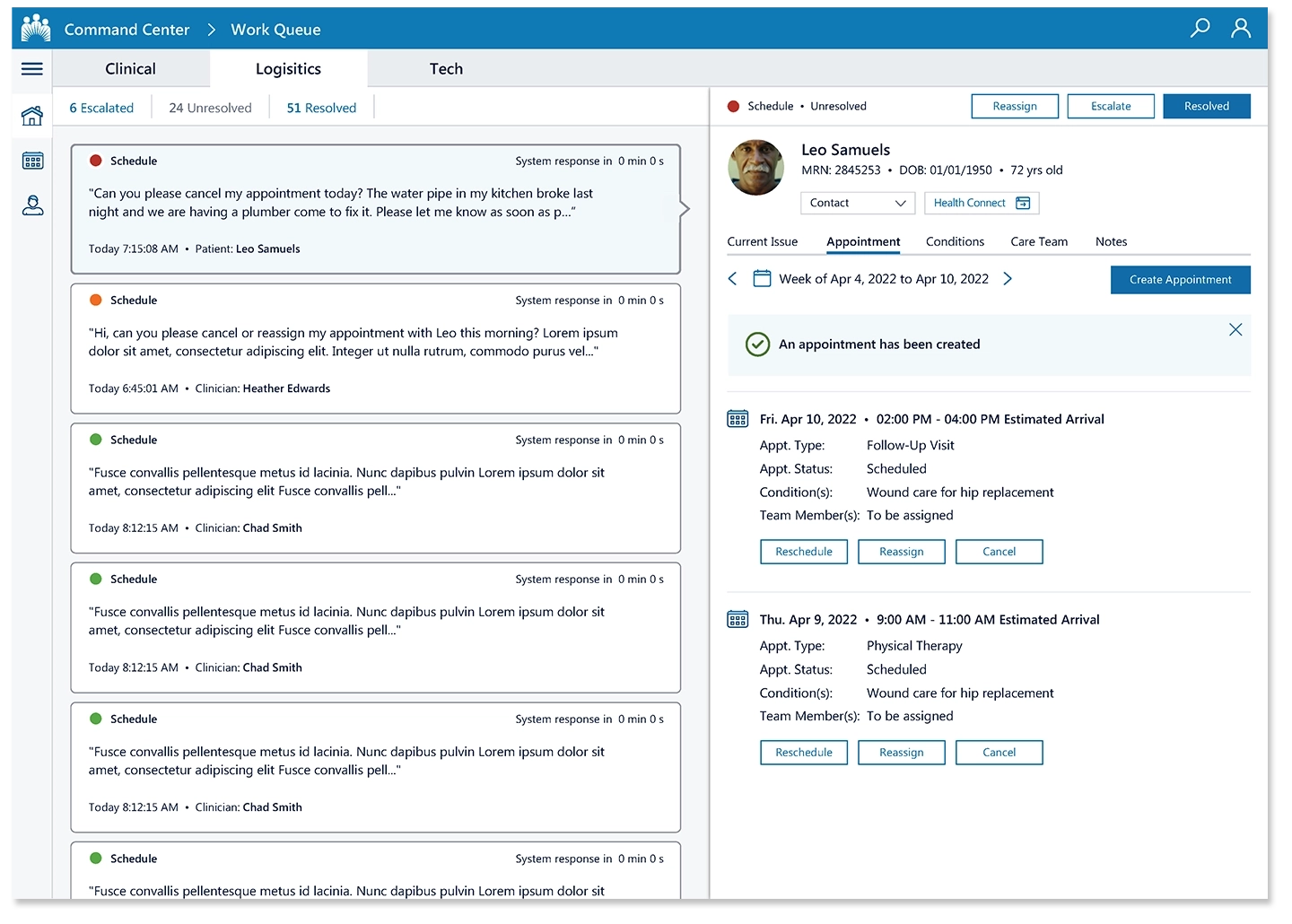
Designed the Dynamics 365 "Command Center" workflows and UI for care support teams. The system integrates real-time appointment updates and communication tools to streamline care coordination.
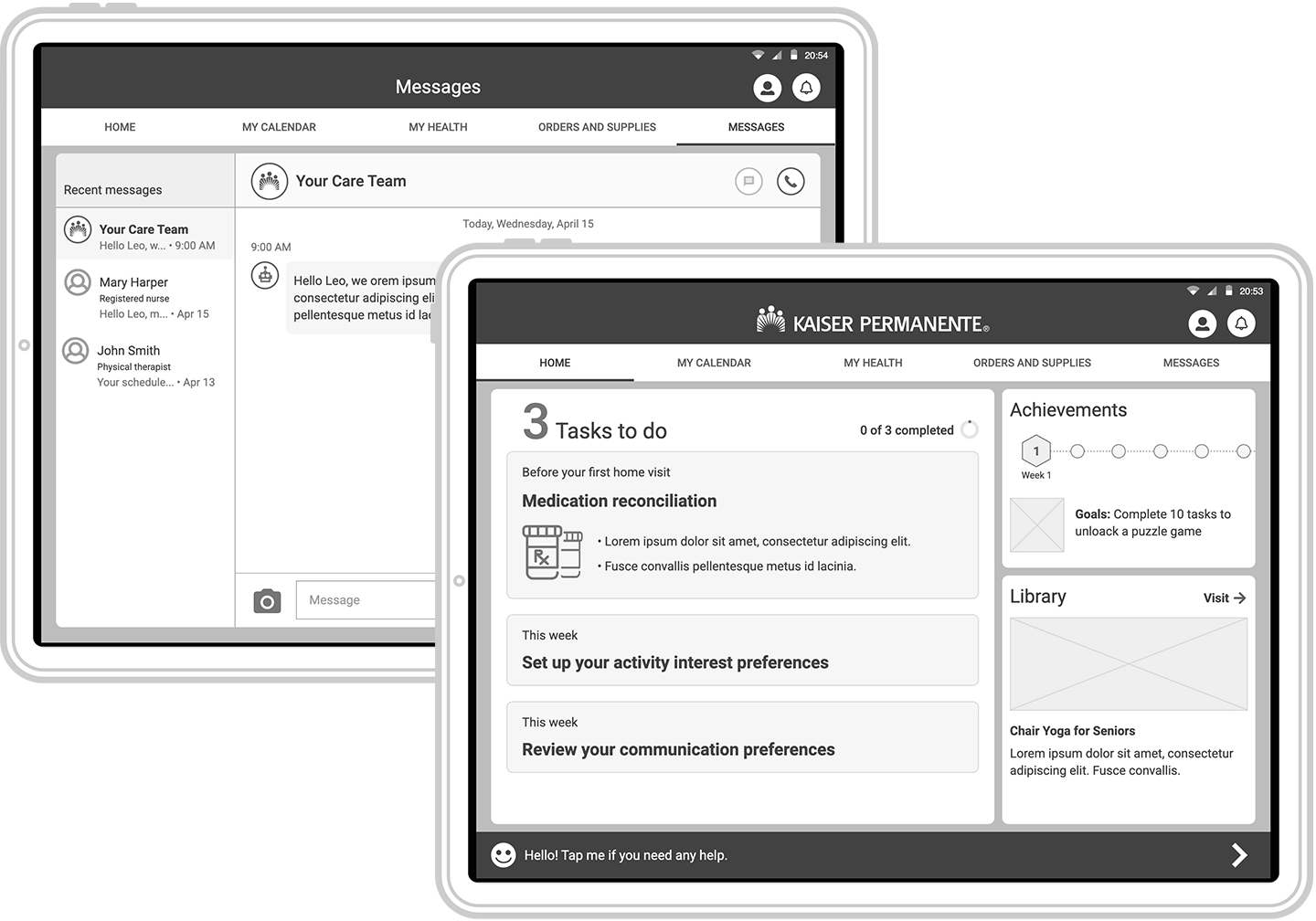
Selected Kaiser Permanente members received Android tablets with features to build patient accountability and strengthen engagement with care providers.
The proof-of-concept products revealed valuable insights into patient engagement and care delivery, providing measurable data that guided key business decisions. As a result, the organization was able to define its home health transformation strategy with greater clarity.